A reliable water source is essential for every home, farm, and commercial property. Borewell drilling is one of the most common methods of accessing groundwater. Learn the process, cost factors, and expert tips.
A reliable water source is essential for every home, farm, and commercial property. Borewell drilling is one of the most common methods of accessing groundwater. Proper planning, choosing the right location, and hiring experienced professionals can improve the chances of a successful borewell and reduce long-term maintenance costs.
**Borewell Drilling Process**
*Site Survey:* A site inspection is carried out to identify a suitable location, considering groundwater availability, soil and rock conditions, accessibility for drilling equipment, and distance from septic tanks or drains.
*Groundwater Survey:* A professional hydrogeological or geophysical survey helps estimate the best drilling location and depth, improving the chances of finding a productive water source.
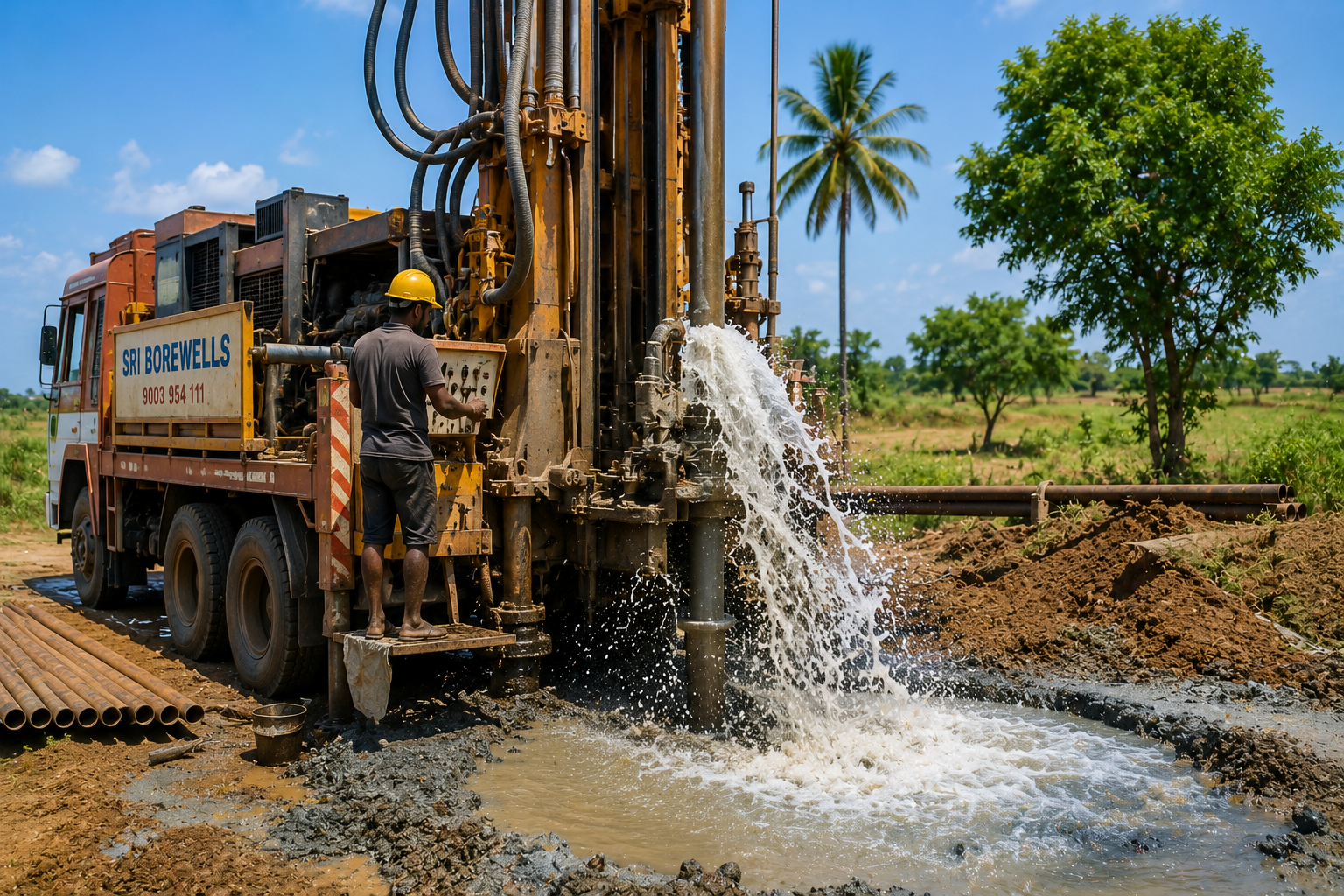
*Borewell Drilling:* A drilling rig drills through soil and rock until a suitable water-bearing layer (aquifer) is reached. Required depth depends on local groundwater levels, geological conditions, and water demand.
*Casing Pipe Installation:* PVC or steel casing pipes prevent soil collapse, protect the borewell, improve durability, and reduce contamination.
*Flushing and Cleaning:* Compressed air or water removes drilling debris, sand, and loose particles from the borewell, improving water flow and pump performance.
*Pump Installation:* A suitable submersible pump is selected based on borewell depth, water level, required water flow, and daily water usage.
**Factors That Affect Borewell Cost**
Drilling depth, soil and rock conditions, casing pipe length, pump type, electrical connections, transportation of drilling equipment, and local labour charges. Always request a detailed quotation before starting the work.
**How to Choose the Right Borewell Contractor**
Select a contractor who has experience in borewell drilling, uses modern drilling equipment, provides transparent pricing, offers quality casing materials, assists with pump installation, and provides after-service support.
**Tips for Better Borewell Performance**
Conduct a groundwater survey before drilling, use high-quality casing pipes, install the correct pump size, clean the borewell periodically, monitor water levels during dry seasons, and protect the borewell from surface contamination.
**Borewell Maintenance Tips**
Inspect the pump annually, clean the borewell when water flow decreases, check electrical connections regularly, replace damaged pipes or fittings promptly, and test water quality periodically for drinking purposes.
**Frequently Asked Questions**
*How deep should a borewell be?* The required depth varies depending on local geology and groundwater availability. A professional survey can help determine the appropriate depth.
*How long does borewell drilling take?* Most residential borewell drilling projects can be completed within 1–3 days, depending on soil conditions and drilling depth.
*How often should a borewell be maintained?* A general inspection every year and cleaning when water flow decreases will help maintain good performance.
*Is water testing necessary?* Yes. If the borewell water is used for drinking or cooking, periodic water quality testing is recommended.
**Borewell Drilling Process**
*Site Survey:* A site inspection is carried out to identify a suitable location, considering groundwater availability, soil and rock conditions, accessibility for drilling equipment, and distance from septic tanks or drains.
*Groundwater Survey:* A professional hydrogeological or geophysical survey helps estimate the best drilling location and depth, improving the chances of finding a productive water source.
*Borewell Drilling:* A drilling rig drills through soil and rock until a suitable water-bearing layer (aquifer) is reached. Required depth depends on local groundwater levels, geological conditions, and water demand.
*Casing Pipe Installation:* PVC or steel casing pipes prevent soil collapse, protect the borewell, improve durability, and reduce contamination.
*Flushing and Cleaning:* Compressed air or water removes drilling debris, sand, and loose particles from the borewell, improving water flow and pump performance.
*Pump Installation:* A suitable submersible pump is selected based on borewell depth, water level, required water flow, and daily water usage.
**Factors That Affect Borewell Cost**
Drilling depth, soil and rock conditions, casing pipe length, pump type, electrical connections, transportation of drilling equipment, and local labour charges. Always request a detailed quotation before starting the work.
**How to Choose the Right Borewell Contractor**
Select a contractor who has experience in borewell drilling, uses modern drilling equipment, provides transparent pricing, offers quality casing materials, assists with pump installation, and provides after-service support.
**Tips for Better Borewell Performance**
Conduct a groundwater survey before drilling, use high-quality casing pipes, install the correct pump size, clean the borewell periodically, monitor water levels during dry seasons, and protect the borewell from surface contamination.
**Borewell Maintenance Tips**
Inspect the pump annually, clean the borewell when water flow decreases, check electrical connections regularly, replace damaged pipes or fittings promptly, and test water quality periodically for drinking purposes.
**Frequently Asked Questions**
*How deep should a borewell be?* The required depth varies depending on local geology and groundwater availability. A professional survey can help determine the appropriate depth.
*How long does borewell drilling take?* Most residential borewell drilling projects can be completed within 1–3 days, depending on soil conditions and drilling depth.
*How often should a borewell be maintained?* A general inspection every year and cleaning when water flow decreases will help maintain good performance.
*Is water testing necessary?* Yes. If the borewell water is used for drinking or cooking, periodic water quality testing is recommended.
Was this helpful?
Share this article with someone who might find it useful.
Start Your Project Today
Connect with verified builders and get multiple quotes for your construction needs.